
How to Use Flashcards: The Science of Active Recall & Spaced Repetition
Neuroscience shows that between the ages of 3 and 6, a child's brain forms over 1 million new neural connections every single second. Yet, traditional passive learning methods—like passively reading picture books or watching educational tablet videos—often fail to produce lasting conceptual understanding.
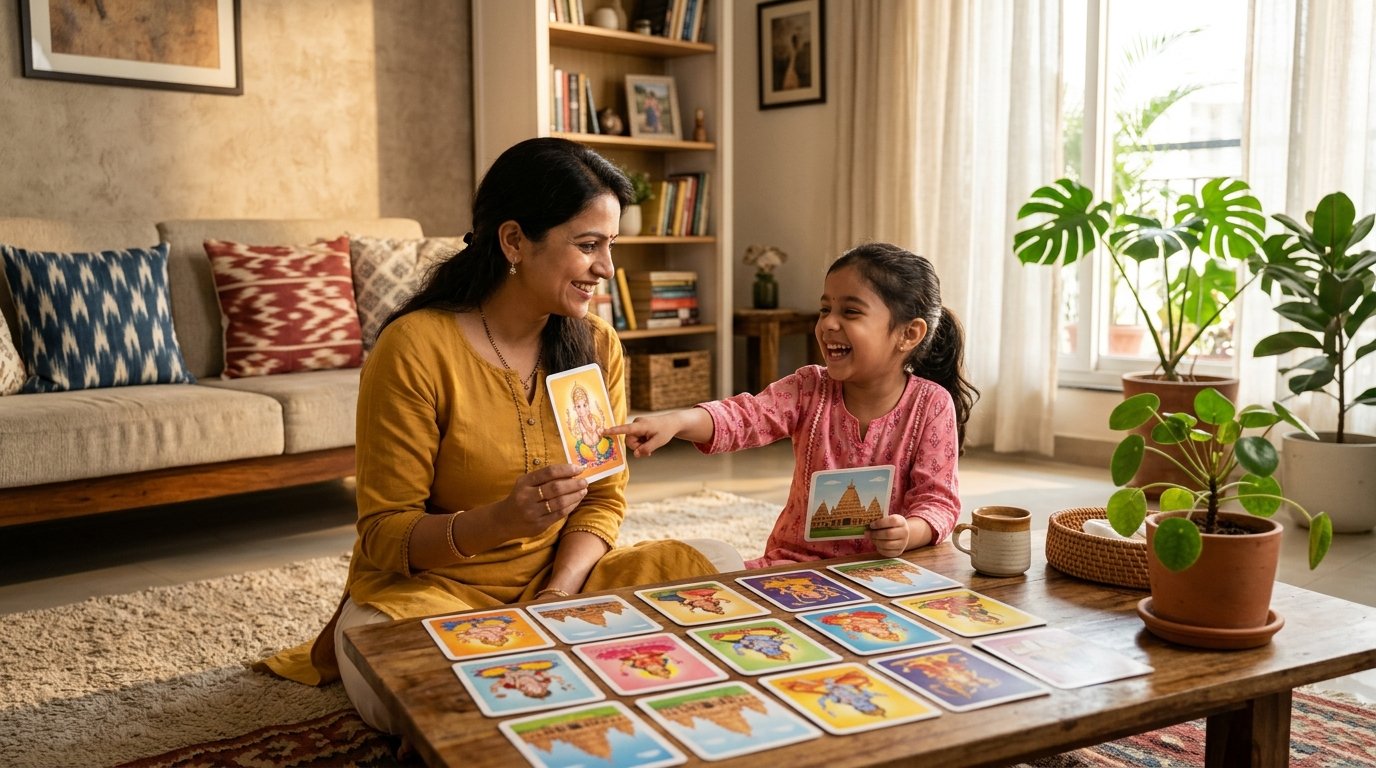
Flashcards, when used correctly, tap into two of the most thoroughly validated principles of cognitive psychology: Active Recall and Spaced Repetition. Here is how parents can apply these techniques at home in just 5 delightful minutes a day.
1. The Magic of Active Recall: Test Before You Tell
Passive recognition occurs when you show a card and immediately say: "Look, this is Lord Shiva!" The child simply nods. Their brain doesn’t have to do any heavy lifting.
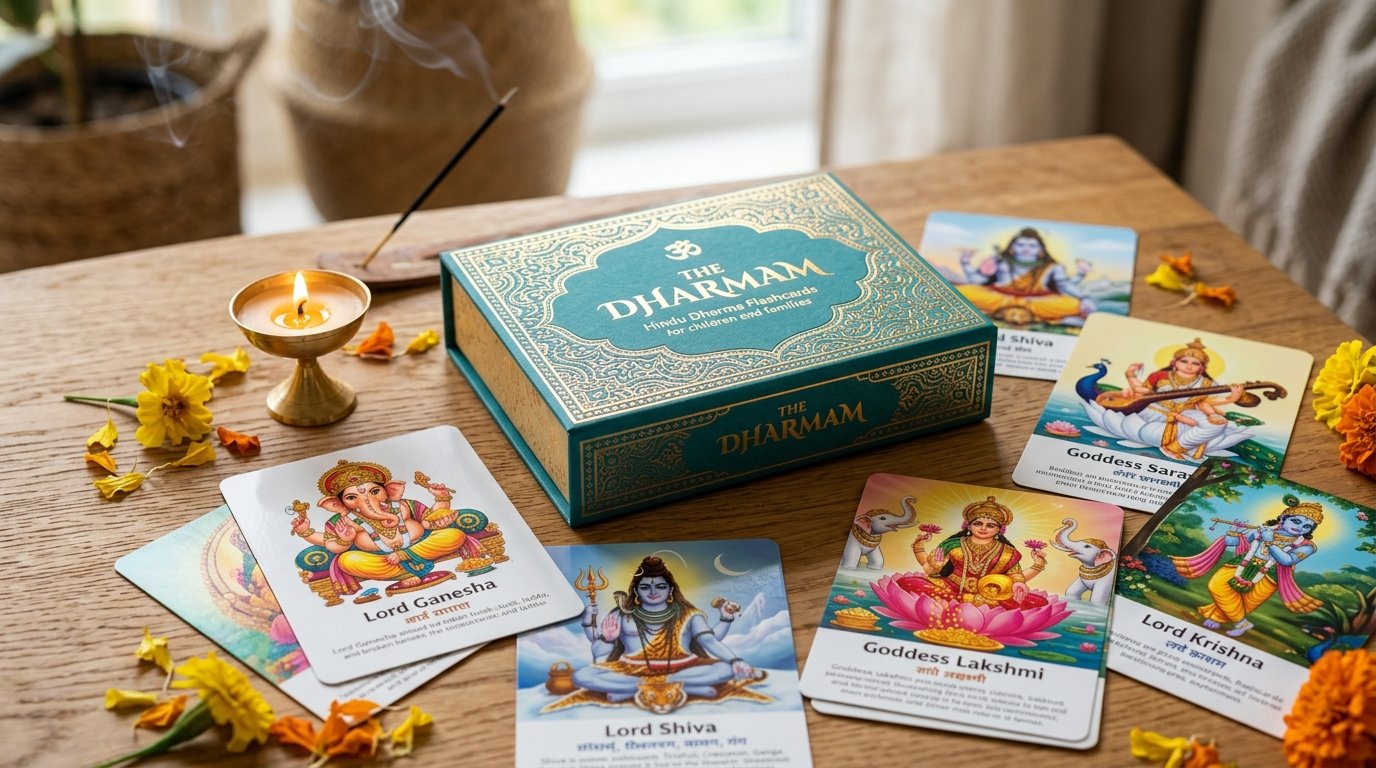
Active recall flips this. You show the image face first and pause for 3 to 5 seconds. You ask: "Who has the crescent moon in his hair and the snake around his neck?" When your child searches their mental library and retrieves the answer, their brain fires a synaptic pulse that cements that concept into long-term memory.
2. The 3-Pile Spaced Repetition Method (Simple Box System)
German psychologist Sebastian Leitner proved that information is best retained when reviewed just as it is about to be forgotten. You can set this up in 30 seconds using three simple rubber bands or trays:
- Pile 1 — Daily (New or Tricky Cards): Review these every morning. (e.g. Deities or habits they get stuck on).
- Pile 2 — Every 3 Days (Growing Familiarity): When a child correctly names a card from Pile 1 two days in a row, graduate it here!
- Pile 3 — Once a Week (Mastered Champions): Once a card is effortless, review it once a week for quick victory laps and celebration!
3. The 5-Minute Golden Rule (Never Burn Out)
Preschoolers have an average attentional span of approximately 3 to 5 minutes per year of age. That means a 4-year-old thrives during a 5 to 10 minute play session.
Always stop the session before the child asks to stop, while they are still giggling and asking for "one more card!" This leaves them eager to open the deck again tomorrow.
4. Multisensory Anchoring: Sanskrit Phonetics & Touch
Language acquisition is accelerated when visual input is coupled with acoustic vibration and tactile touch:
- Visual: High-contrast deities, temple towers, or habit illustrations.
- Acoustic: Chanting the Sanskrit Devanagari phonetics aloud (e.g., resonant "AUM" or "SHREEM").
- Tactile: Let them hold the thick 350 GSM cards, trace the rounded edges, or physically place them in sequence.
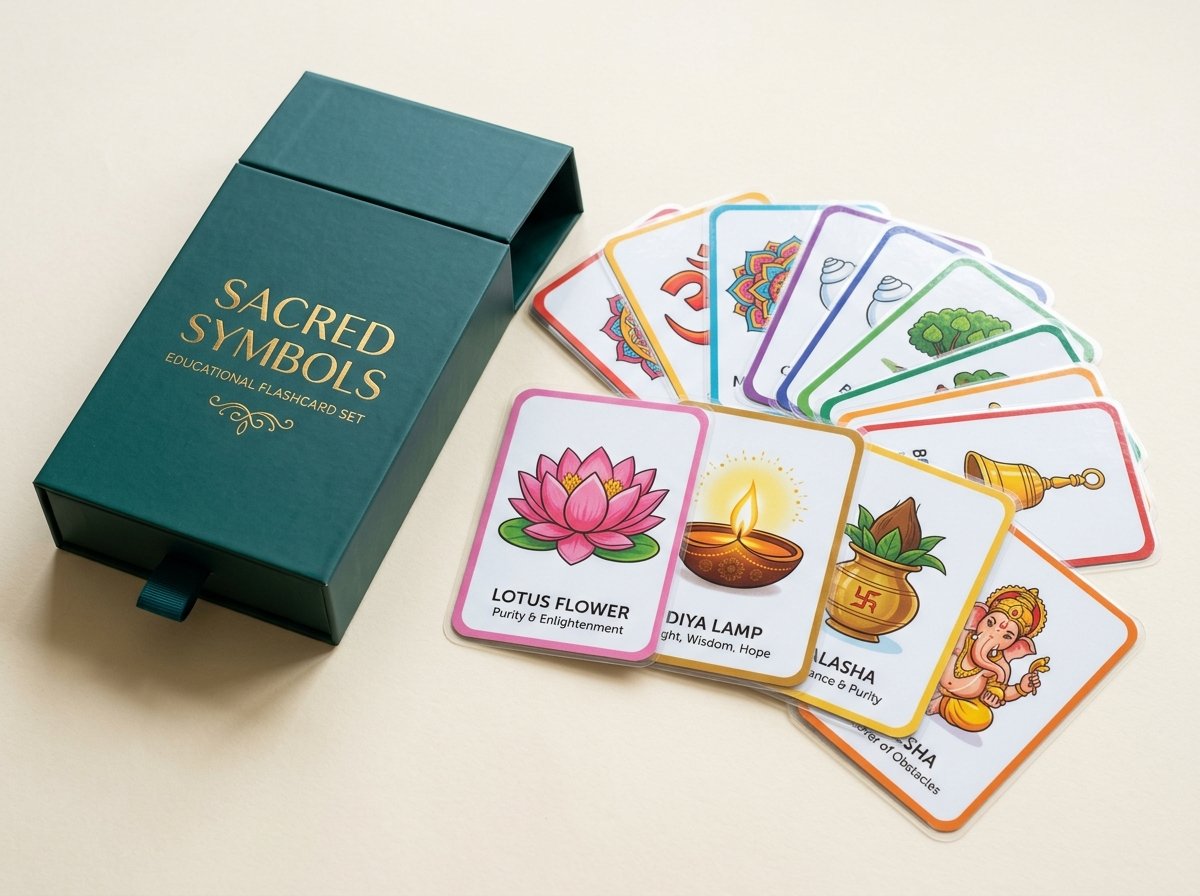
Hindu Symbols Flashcards (25 Cards)
Ideal deck for Active Recall and Spaced Repetition drills: Om, Swastika, Trishula, Lotus, and sacred Vedic geometry. 350 GSM premium thick cards.

5. Zero Pressure, 100% Celebration
Never treat flashcard time as an examination. If your child misidentifies a card, simply say with a warm smile: "Ah, that one looks tricky! This is Lord Vishnu who rests on Sheshanaga. Let's look at his lotus together!" When fear of being wrong is removed, curiosity and enthusiasm take flight.